
From Receiving an Opportunity to Passing It On
It had been raining for two days when Thuc, Duong, and Manh carried bookshelves, boxes of books, and toys into a small preschool in the mountains of Huong Hoa, Quang Tri.
For Thuc, the preschool was familiar. She had once been a student there, waiting quietly in the schoolyard when her mother was late from work. Now, after a rainy and difficult journey into the mountains, she returned with Duong and Manh to bring books and stories to another generation of children. Duong, preparing for her first real classroom experience, carefully arranged the books while trying to steady her nerves. Manh carried a different uncertainty, wondering after weeks of preparation and days of rain whether one afternoon of reading would truly be worth the effort.
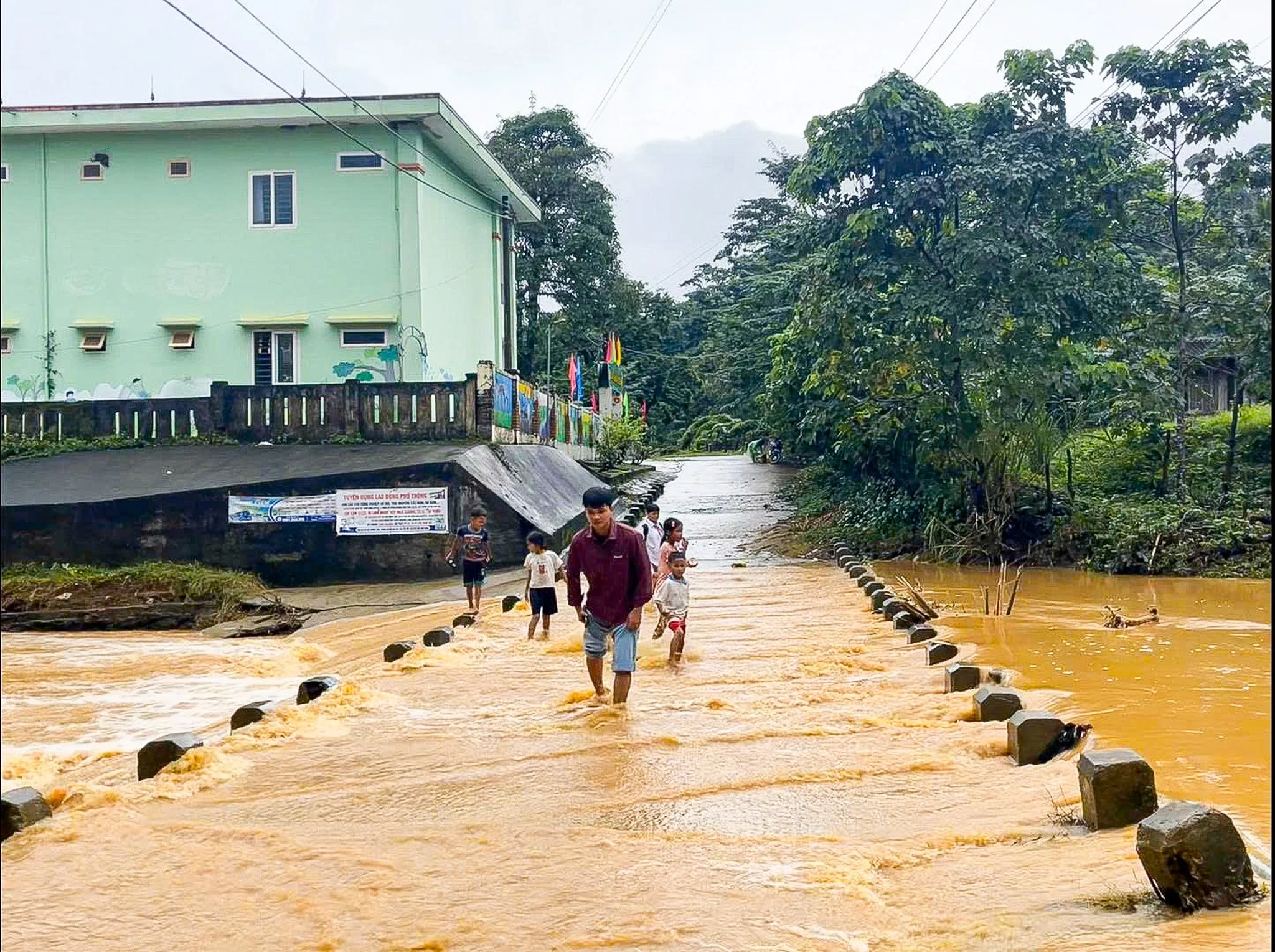
Manh and the children on their way to Ba Tang Preschool in the mountains of Huong Hoa, Quang Tri.
Yet all three knew reaching this school had taken them far more than 170 kilometers between their university in Hue and their hometown.
Thuc grew up in a family where hardship was rarely spoken about. Her parents did not complain, and even simple meals were filled with conversation and laughter. She only began to understand how difficult life was when she left for boarding school in Grade 11. Before she left, her father handed her several large denomination bills and told her to keep them carefully. Later, she learned that he had borrowed the money from different people until he had enough for her to continue school. It was one of the first times Thuc understood how much her parents were quietly carrying for her education.
Manh left home even earlier. At 12, he moved away to boarding school while his mother raised the family on her own. During his first months away, he sometimes avoided calling home because hearing his mother's voice made the homesickness harder. At school, his limited Vietnamese added another challenge. Speaking in front of the class often meant rehearsing every word in his mind before finding the courage to say it aloud, and his lack of confidence made it difficult to make friends.
Manh and the children on their way to Ba Tang Preschool in the mountains of Huong Hoa, Quang Tri.
Duong grew up hearing that education was the path that could take her beyond her family's hardship. Still, she was not always sure she could follow that path. There were times when she expected that financial pressure would eventually force her to leave school and find work to help her family. Three students from three different communes in Quang Tri, each carrying different worries, kept going.
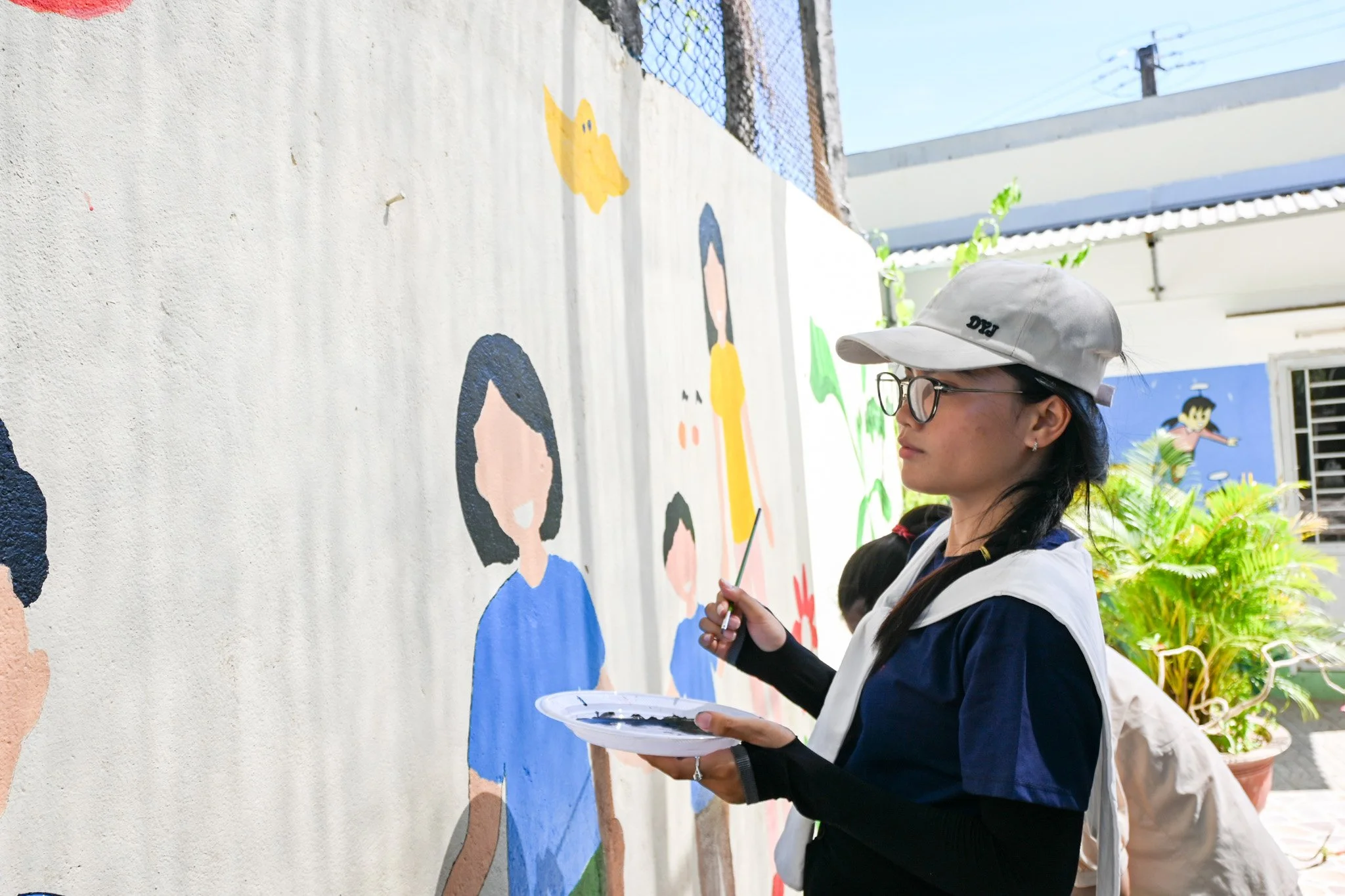
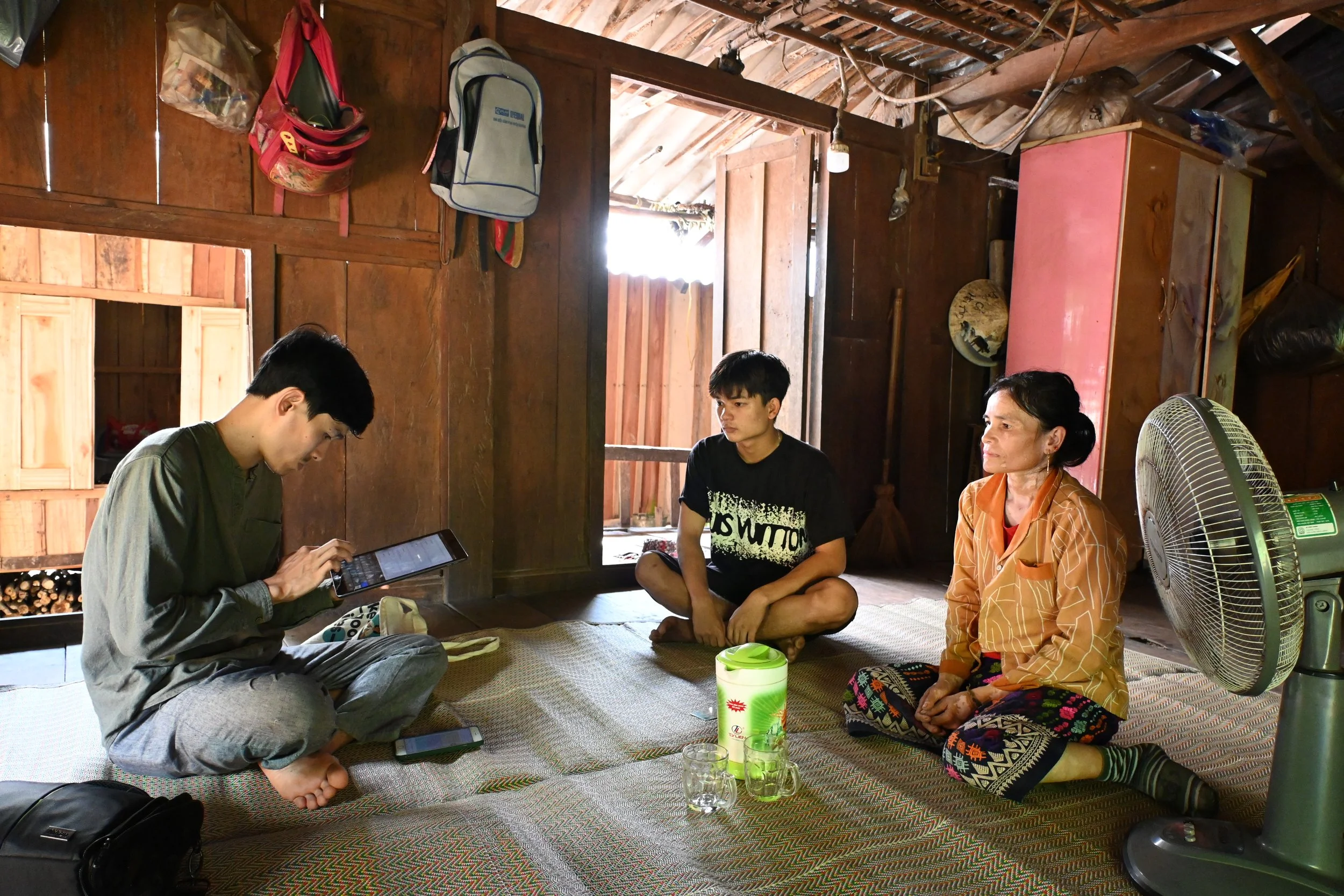
Two years ago, all three earned places at Hue University of Education. Manh began studying Geography Education, while Thuc and Duong chose Early Childhood Education. They had known one another since high school, but through Children of Vietnam's Bright Scholars program, familiar faces gradually became close friends.
Duong still remembers the moment she learned she had received the scholarship: “My whole family was so happy,” she said. Thuc was just as surprised: “I couldn't believe I had received a scholarship of this value.” For Manh, the first thing he did was call home. “As soon as I heard the news, I called my mother," he shared.
Bright Scholars helped cover part of their tuition and monthly living expenses, easing some of the pressure of studying away from home. But the program also gave them opportunities they had never expected.
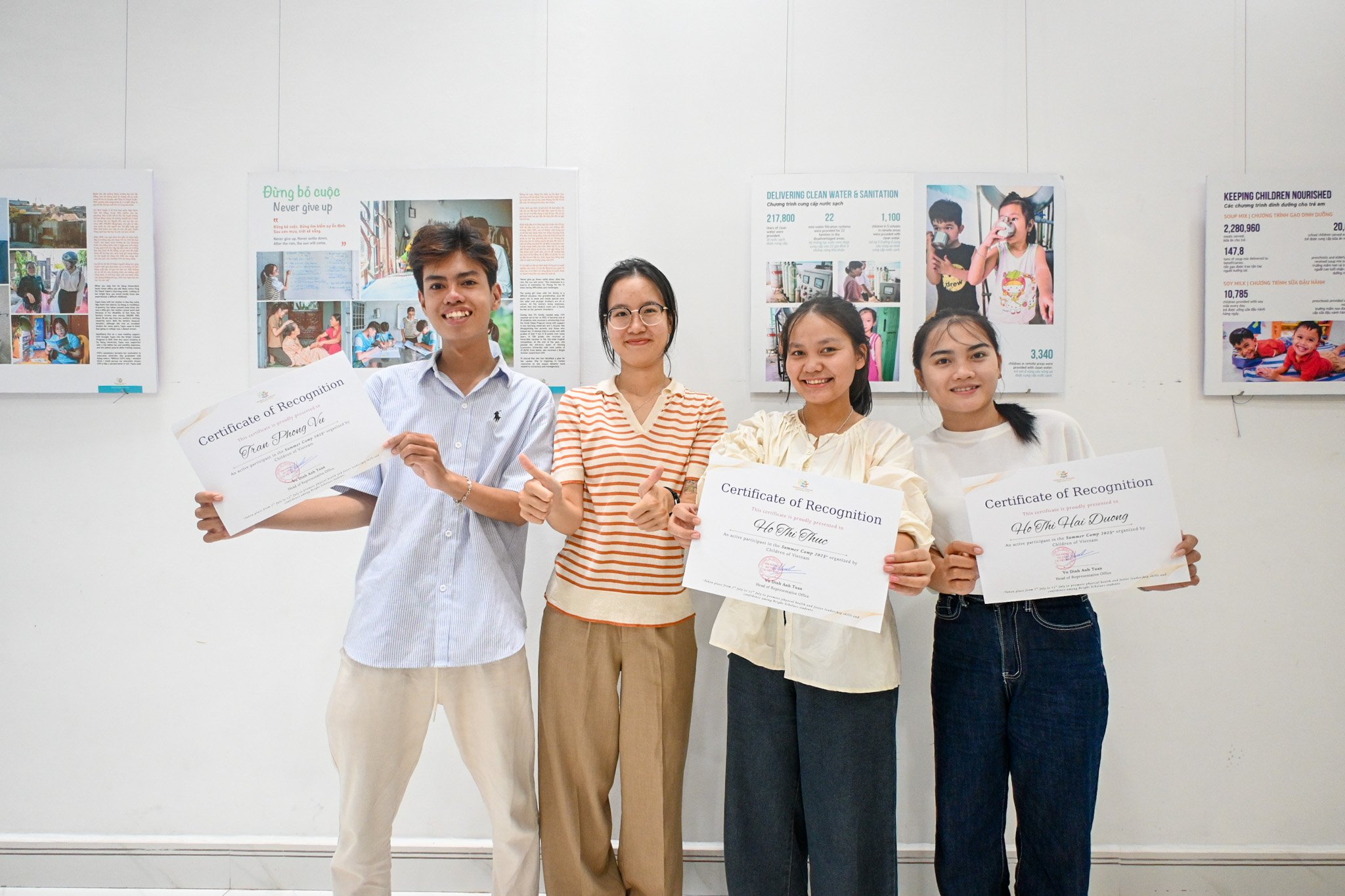
Duong (far right) and Thuc (second from right) receive certificates recognizing their participation in Bright Scholars program activities.
At summer camp, Thuc learned to swim, facing a fear she had carried since nearly drowning as a child. Duong and Manh tried pickleball for the first time, while all three joined personal development activities and built friendships with students whose journeys felt similar to their own. The scholarship made university less financially overwhelming. The friendships made studying far from home less lonely. Over time, the three began to understand that an opportunity did not have to end with the person who received it. It could be carried forward and shared in another form.


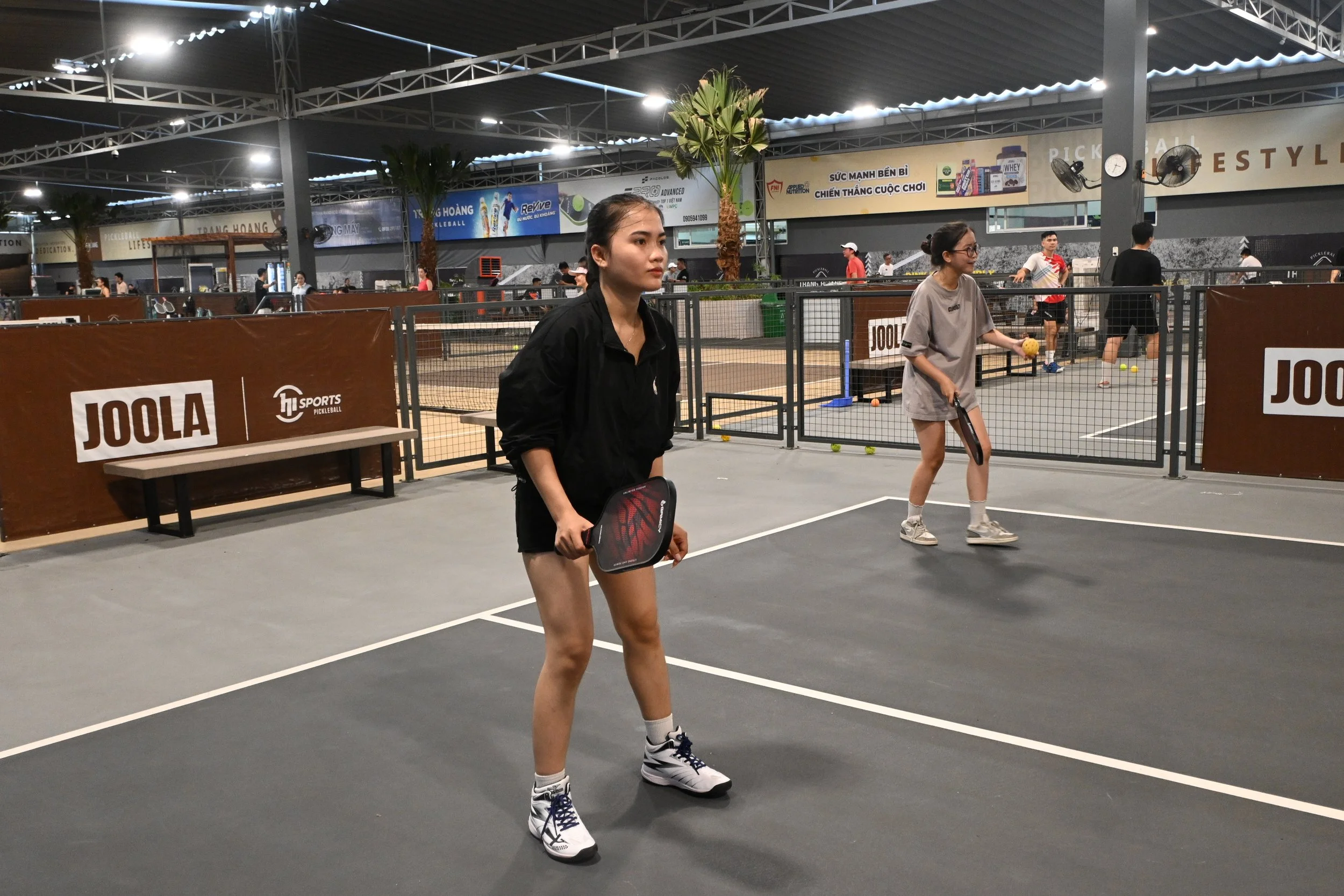
Manh, Thuc, and Duong enjoy swimming and playing pickleball at the 2025 Summer Camp.
That idea became real when Thuc saw an announcement for COV's student Microgrant program. She immediately thought about creating a reading corner for children in her hometown. Thuc remembered wanting greater access to books as a child, but she also remembered the challenge of language. Like many Bru Van Kieu children, Vietnamese had not always come easily, and she knew how difficult it could feel to enter classrooms where the language used for learning was different from the one spoken most naturally at home.
She wanted younger children to become familiar with Vietnamese earlier, not through pressure, but through stories, colorful books, games, and time spent reading together. Turning the idea into a real project, however, was intimidating. Thuc had never organized something like this before, so she asked Duong and Manh to join her. Together, the three planned the reading corner, selected books, prepared activities, and bought toys and shelves.
On the day of the "A Little Story Corner: Nurturing Language Skills for Children in the Highlands" project, at first, the children kept their distance, and Duong, facing a classroom for the first time, wondered how she would reach them. With encouragement from their teachers, however, the children slowly relaxed. Once divided into smaller groups, the room came alive. Manh soon found himself sitting among them, reading aloud, while Thuc, Duong, and Manh naturally switched to Bru Van Kieu whenever Vietnamese became difficult.
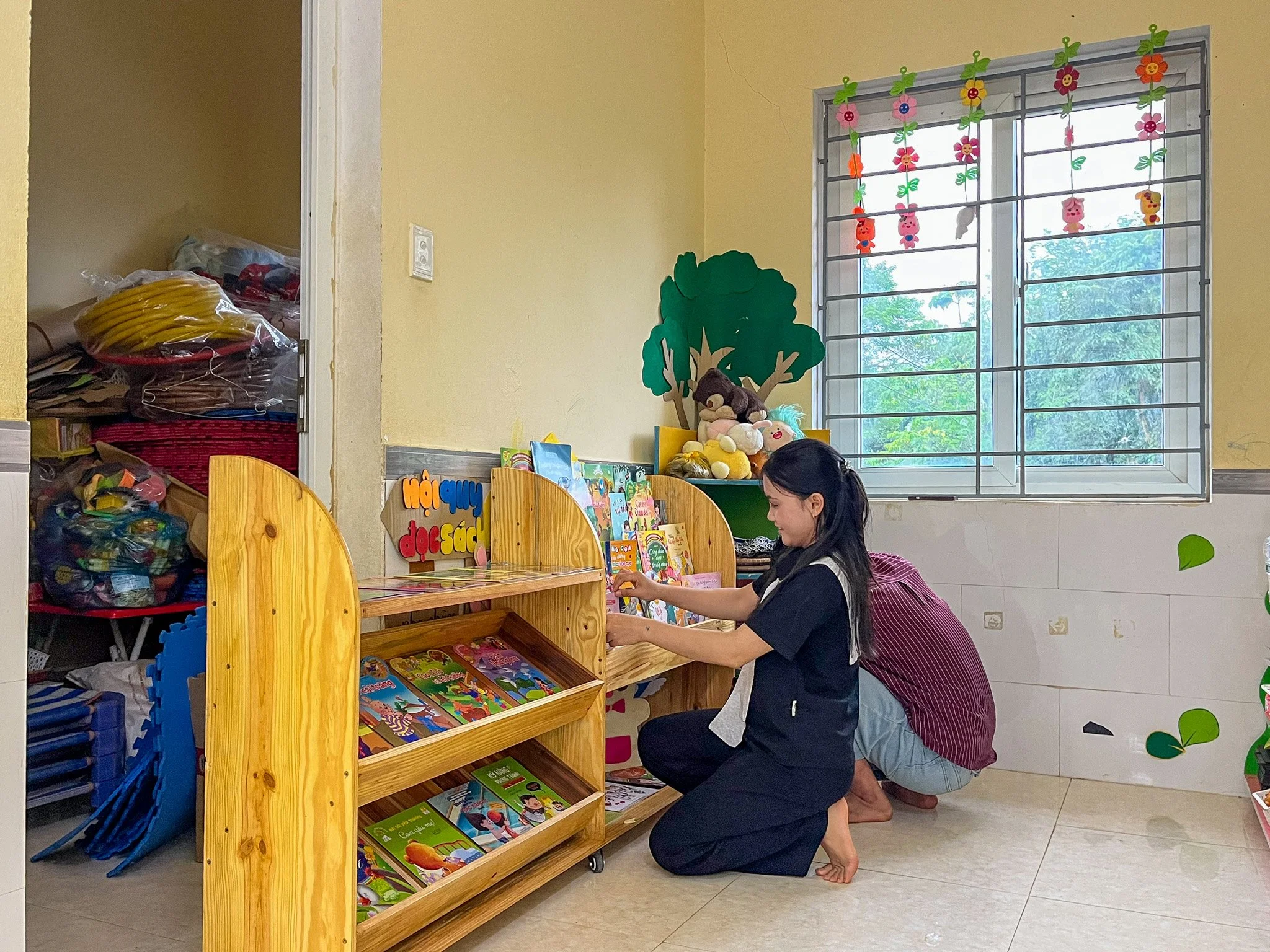
Duong and Manh set up a cozy reading corner for the children at Ba Tang Preschool.
Their shared language quickly built trust. The visitors no longer felt like strangers but young people from the same communities who understood where these children were starting.
The experience also reflected how far each student had come. Thuc, back at the preschool she once attended, saw more clearly that teaching requires patience and care beyond anything learned in a classroom. Duong's nervous first experience with young children ended with her wishing she did not have to leave. And Manh, once too self-conscious to speak Vietnamese in class, was now confidently using both Vietnamese and Bru Van Kieu to help younger children feel understood.
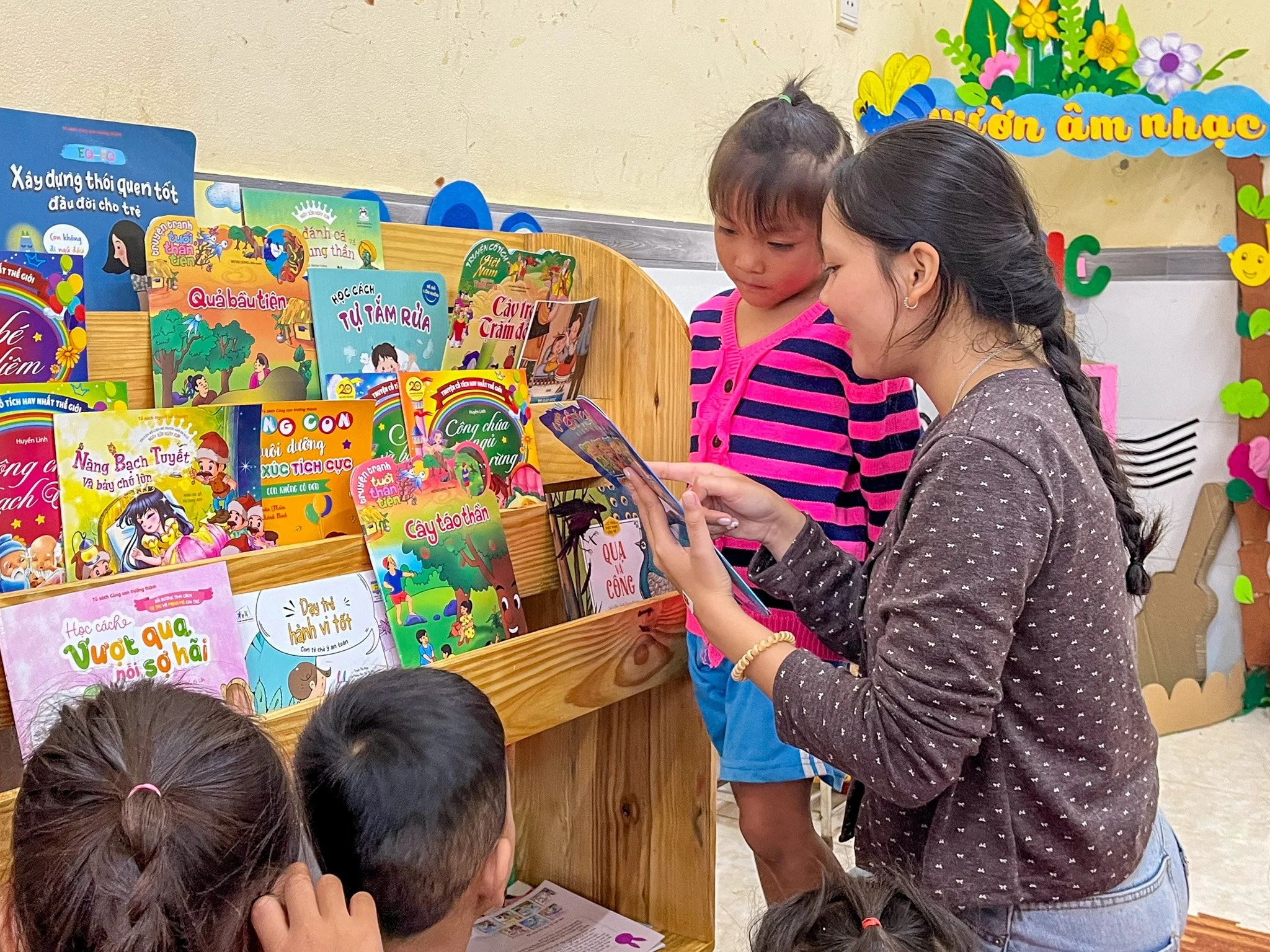
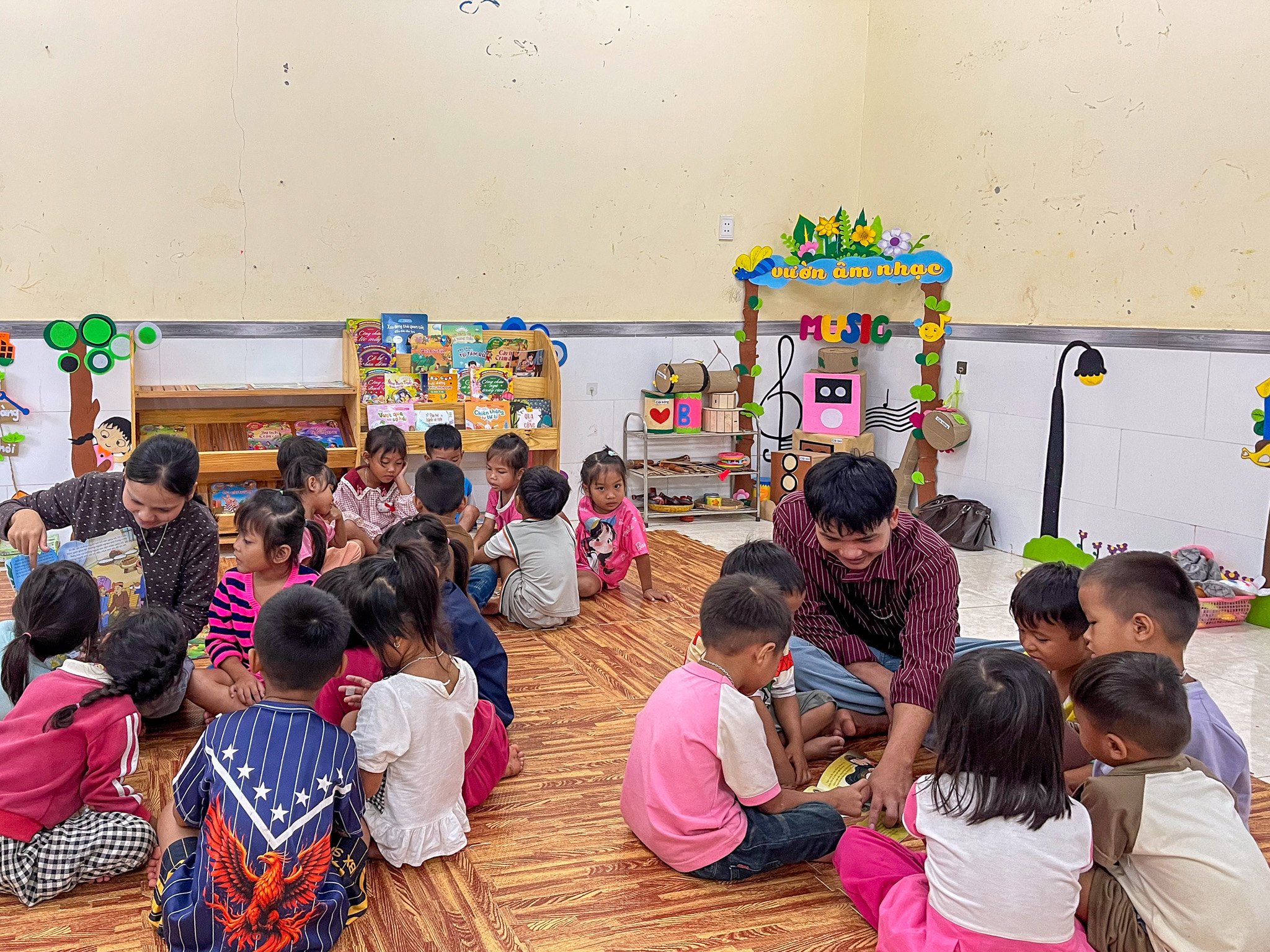
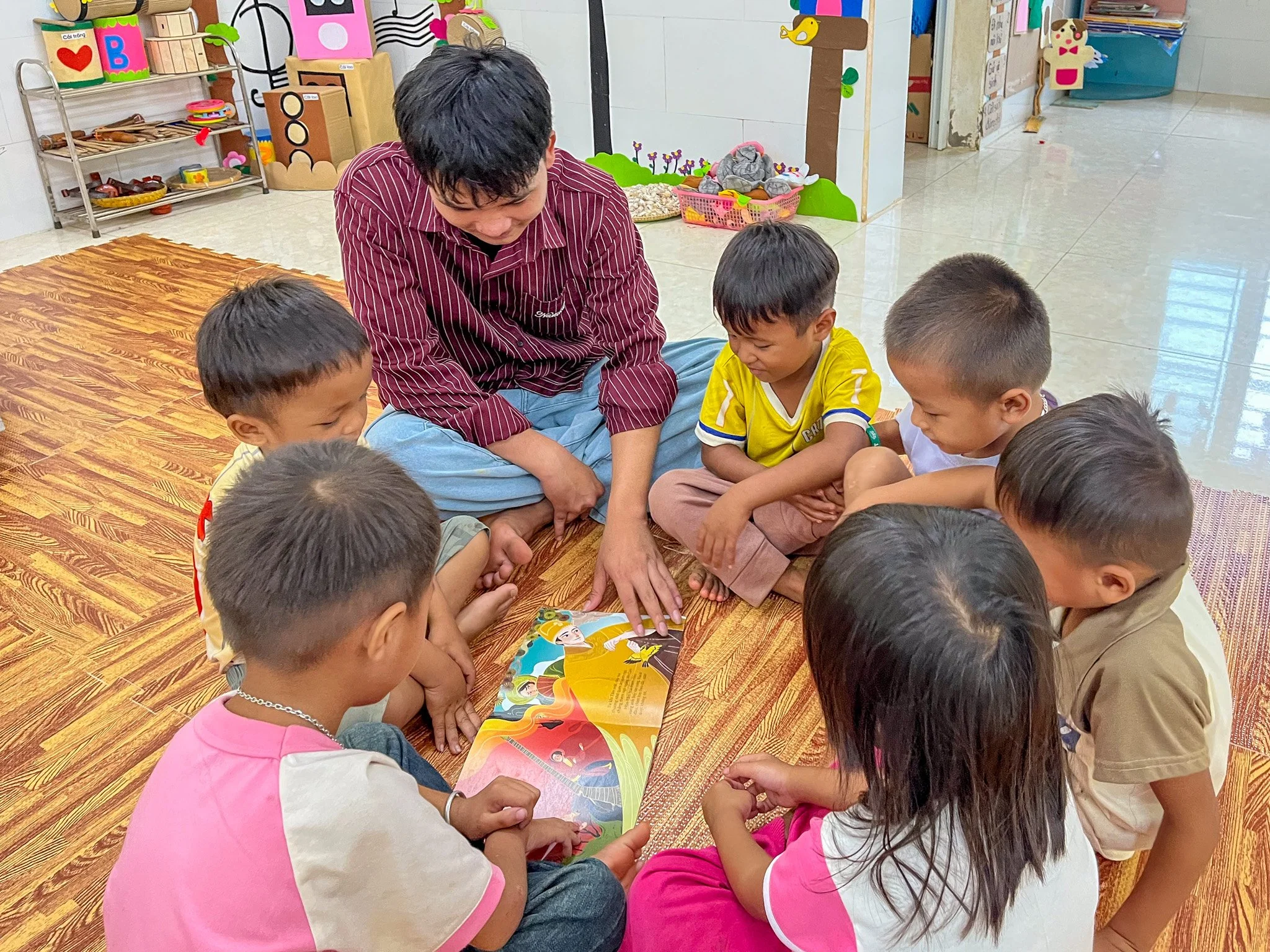
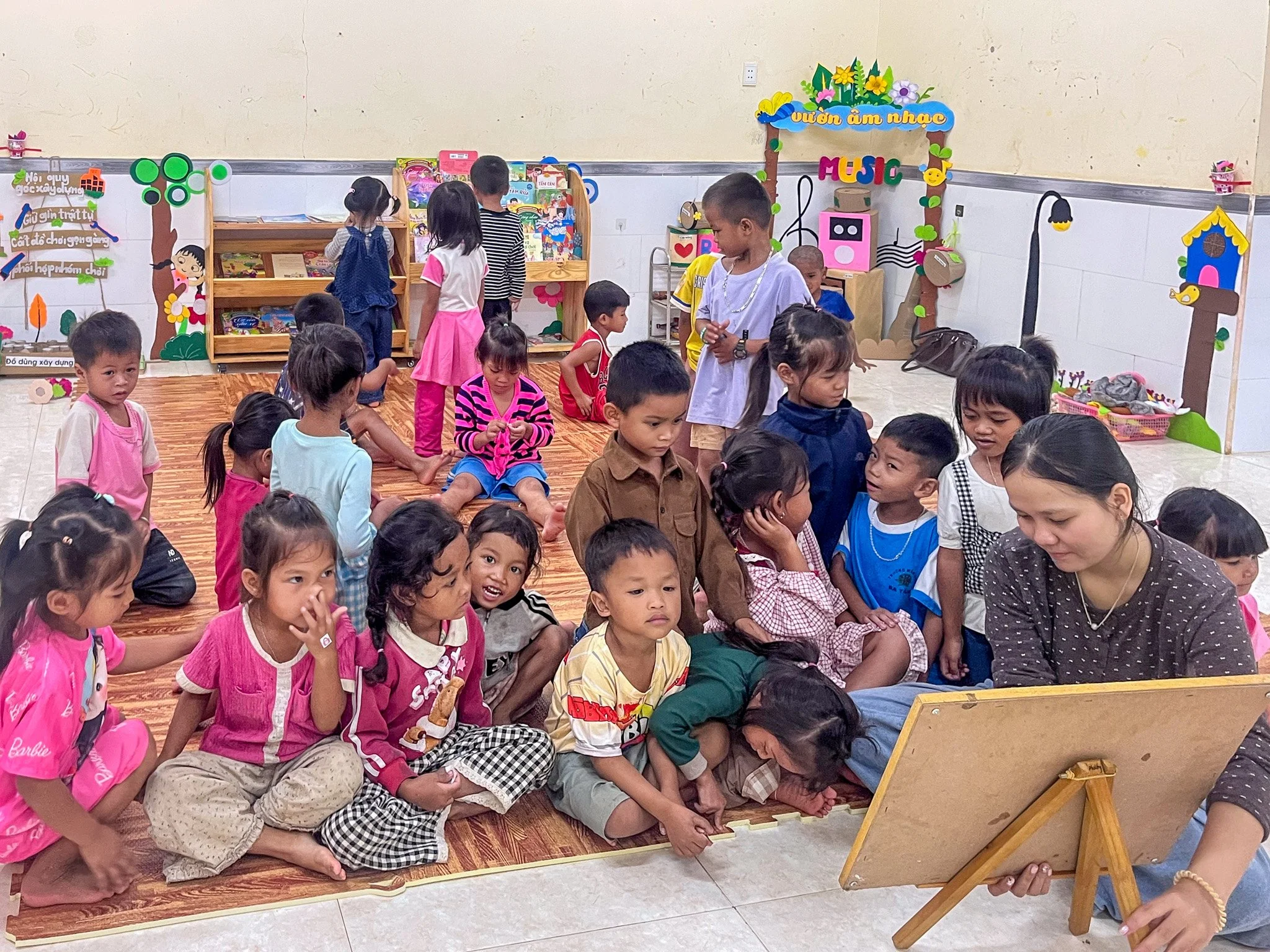
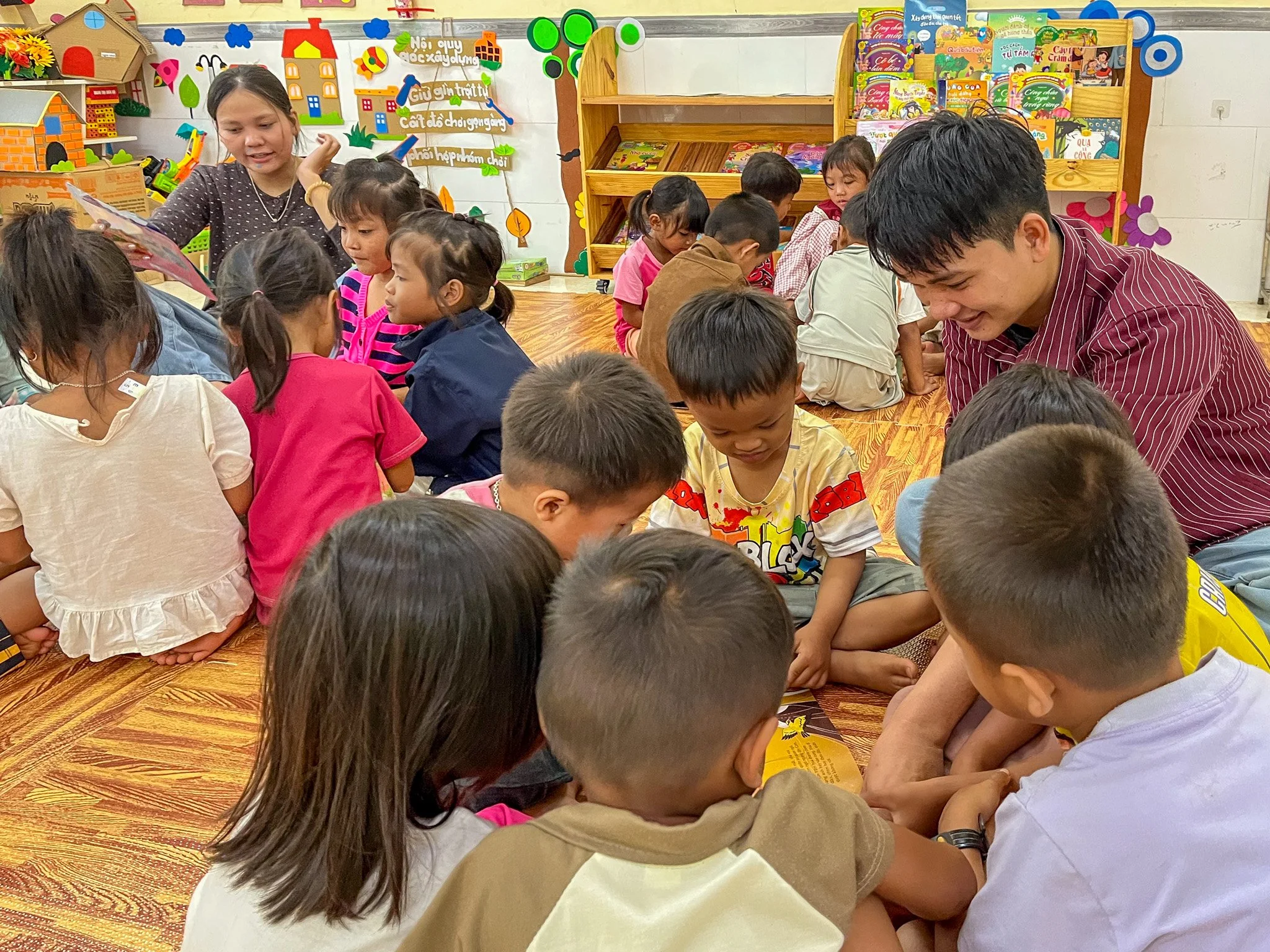
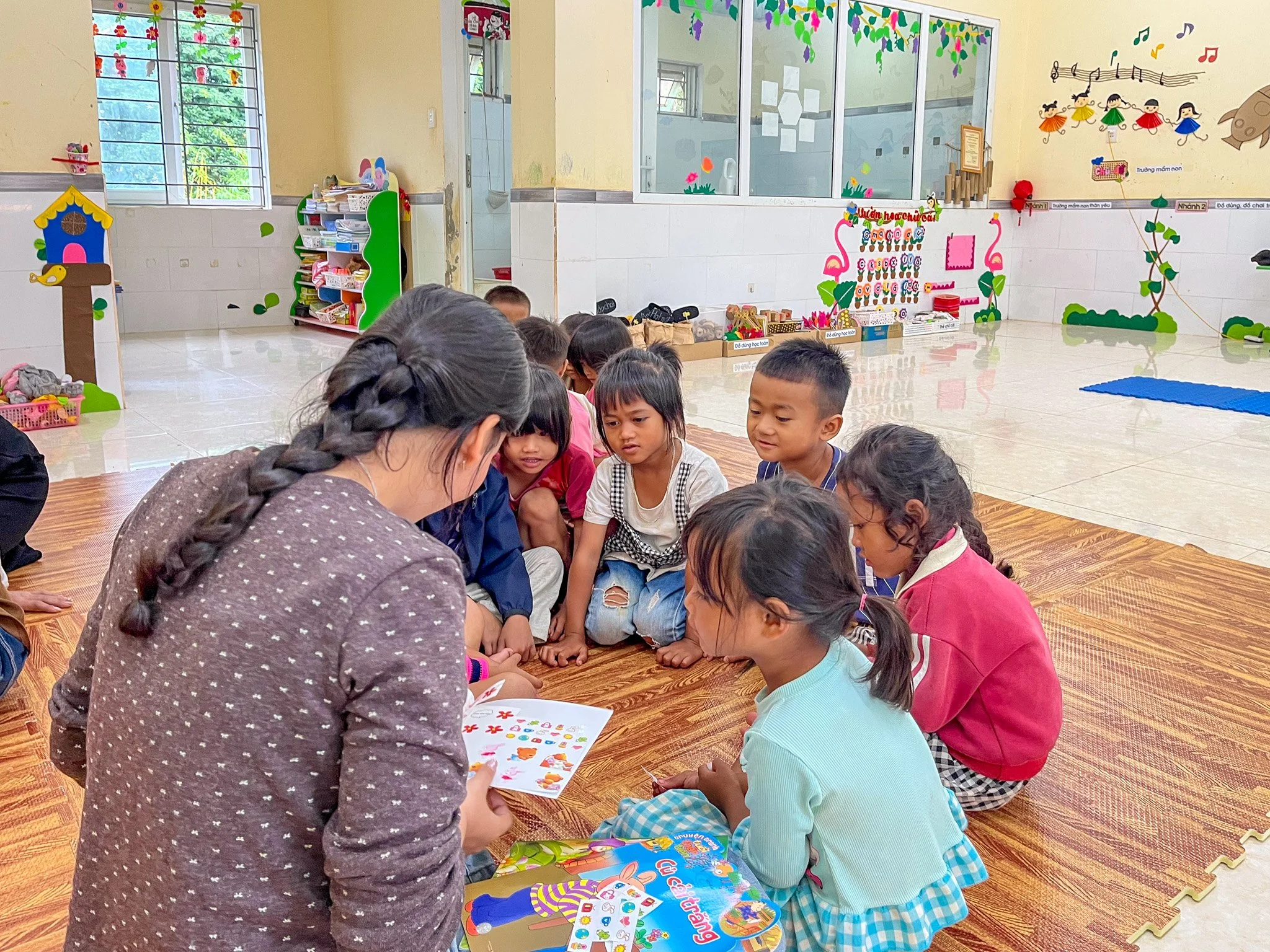
Reading with the children during “A Little Story Corner: Nurturing Language Skills for Children in the Highlands.”
When the session ended, the children remembered their names and waved goodbye. Duong felt unexpectedly sad to leave, while Manh, who had earlier wondered whether the journey was worth it, wished he could stay longer. They had come to share books, stories, and their time, but left feeling they had received something too.
Each of them had once needed someone to help them keep going. Their families, teachers, and Bright Scholars had given them support, confidence, and opportunities they had not imagined for themselves. Now, they were carrying those opportunities forward in their own way.
“We thought we were coming here to give the children something,” they reflected. “But in the end, we received much more than we expected.”
For Thuc, Duong, and Manh, this was what Pass It On had come to mean: an opportunity once given to them, now carried a little farther for someone else.
